
Introduction
With less than 2 weeks until Black Friday, the most important weeks of the year are starting now for many brands and retailers. Shoppers have been comparing prices since early October, and in the coming two weeks, they're ready to start making purchase decisions. Based on our data, here's what's coming.
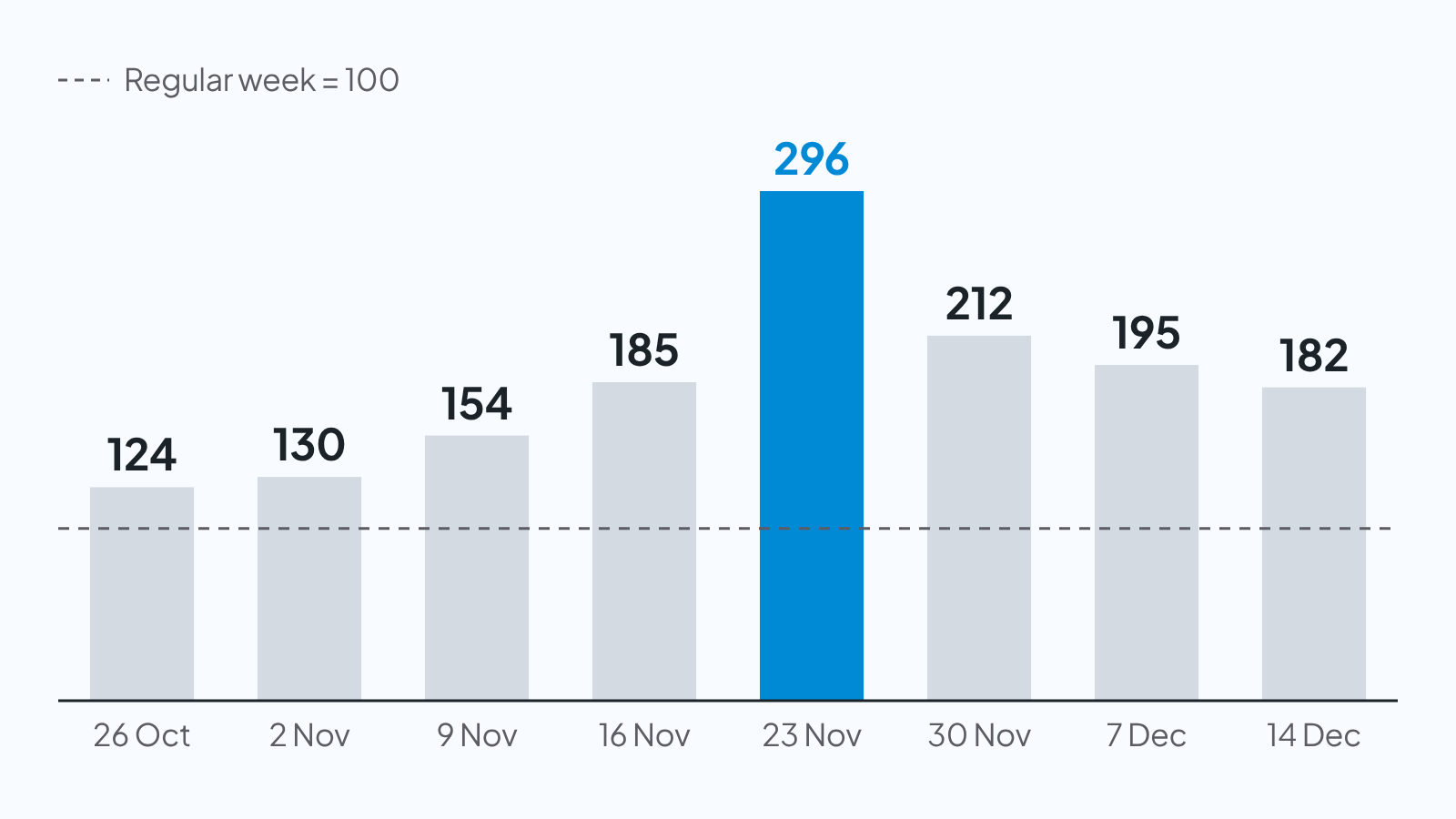
In the Pre-Black Friday surge, starting November 16th 2026, demand increases by up to 2X a regular week. During Black Friday week, demand could increase by up to 60% week over week, reaching nearly 3X regular demand.
With the most important weeks of the year ahead for many merchants, this article summarises what's ahead.
This week, research turns into purchases
The shoppers visiting you this week have been comparing for weeks. Data shows first-time Black Friday buyers first visited the retailer an average of 43 days earlier, based on Criteo data. In a Google survey of Black Friday buyers in six European markets, 78% were already considering their most expensive purchase before the sales started.
Those shoppers researching and comparing are ready to start purchasing now. In 2025 we saw demand growing up to 20% compared to the week before, in the pre-Black Friday week. The weekend before Black Friday is a seasonality spike on its own, generating 25%+ more demand than the weekend before it.
Two dates stand out this week:
- Friday 20 November, Fake Friday. The Friday a week before Black Friday, when search demand for Black Friday deals is already close to its peak.
- Sunday 22 November. Spending climbs from the Sunday before Black Friday. In 2025 that Sunday came in 23% above the Saturday and was the busiest day of the autumn until Black Week.
Black Week runs at about 3X a regular week
Black Week starts on Monday 23 November, and Black Friday falls on 27 November. Based on our data, Black Week demand could be up as much as 60% compared to the week before, or 3X the demand a regular week gets. NIQ measured the same pattern in 2024: online sales in Black Friday week ran 122% to 125% above an average week, depending on the market.
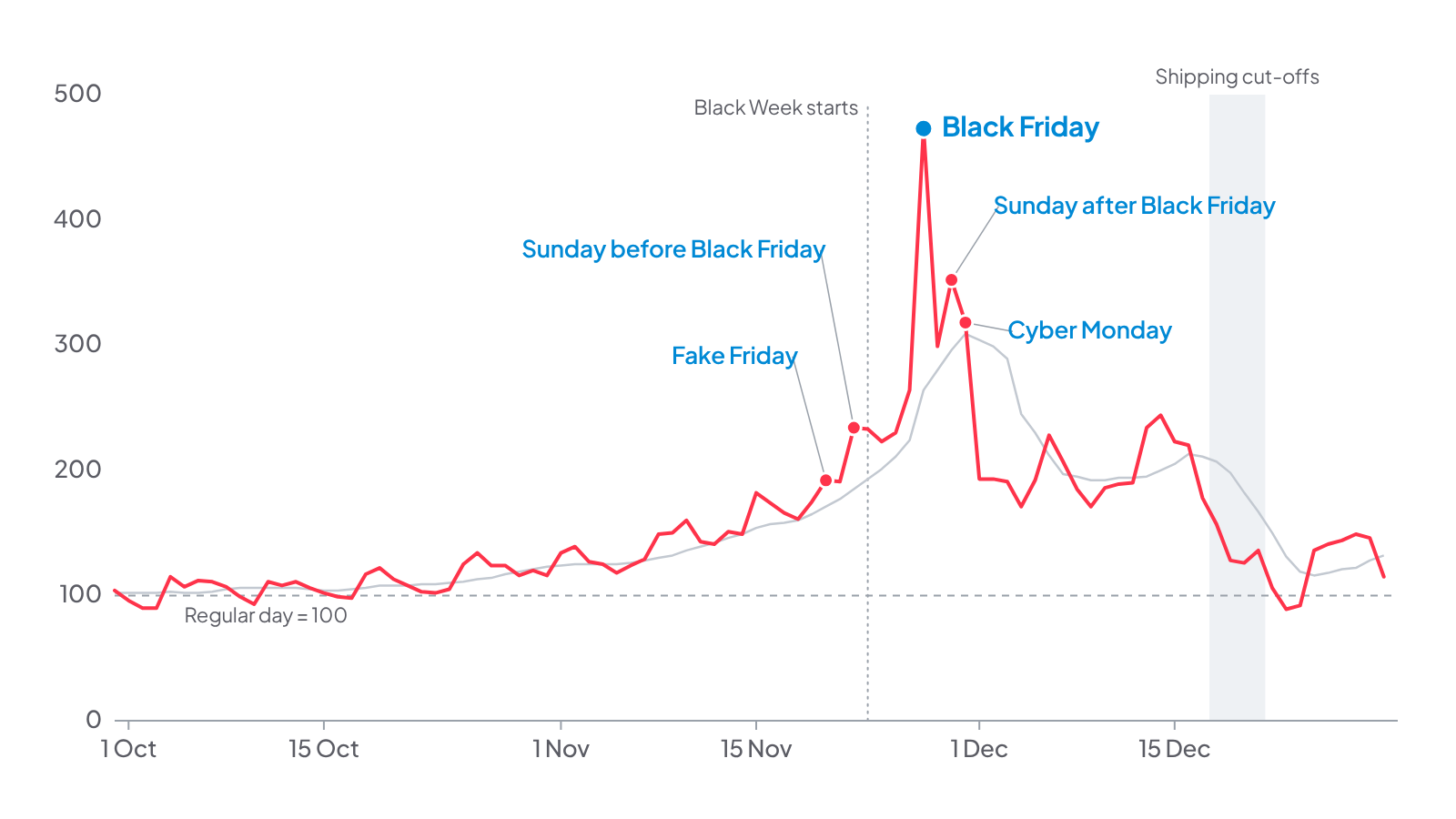
The days around Black Friday matter as much as the day itself. In 2025, Black Friday came in at 1.6 times the average day of its week. The Sunday after Black Friday was the second-biggest day of the season, 11% above Cyber Monday.
Review your commission rates heading into this period
On pay-per-sale, your commission is one of the main factors in how much we can bid per click, alongside conversion rate and product data quality. With Black Friday, CPC bidding auctions get crowded due to advertiser demand. At a standard rate, some auctions in Black Week become too expensive to enter, and the sale goes to a competitor. A higher peak rate keeps your products in those auctions.
Even at a higher commission, your risk stays the same. Shoparize pays for the clicks, and you pay commission only on validated sales, so a click that does not convert costs you nothing. Cost per sale rises for a few weeks, and the rate returns to normal after peak, on a date you agree with your account manager.
Cyber Week and early December get 2X regular demand
Demand drops after Black Friday but stays high. In 2025, Cyber Week came in ±25% below Black Week, but still at about 2X a regular September or October week. The week after held at about the same level.
December brings its own peaks. Sinterklaas (5 December) and Nikolaus (6 December) are the main gifting moments in Benelux and Germany. And after that, of course, Christmas, with postal shipping cut-offs around 18 to 21 December. After that, shoppers care more about availability than price.
Plan December early
To capitalise on Cyber Week and December demand, make sure you plan early:
- Agree when your Q4 commission reverts. Decreasing commissions early might result in missed opportunities in the December peaks.
- Communicate shipping cut-offs and stock. Clear delivery dates matter more than discounts once Christmas gets closer, reflect the relevant information in your product feeds.
- Confirm your post-cutoff plan with your account manager. Decide how to plan for the period after the cutoff-dates, and consider capitalising on in-store demand surging with Local Inventory Ads.
Each market has its own seasonality
A single European Black Friday plan misses the moments that drive each market. Set commissions and promotions per market, timed to its own peak.
| Market | When demand peaks | What it means for timing |
|---|---|---|
| Benelux and Germany | Gifting campaigns peak 15 to 30 November, ahead of Sinterklaas (5 Dec) and Nikolaus (6 Dec) | Your peak rate needs to be live this week |
| Nordics | Black Friday transaction volume reached 6.1x a typical Friday in Denmark and 3.5x in Norway and Finland in 2025 | Demand concentrates on Black Friday itself |
| Spain | Black Friday reached 4.5x a typical Friday in 2025 (Adyen). Reyes Magos (6 Jan) extends gifting into January | Keep campaigns live through the first week of January |
| United Kingdom | Three peaks back to back: Cyber Week, Christmas gifting and the Boxing Day sales (26 Dec) | Plan budgets past Christmas Day |
Shoparize runs campaigns with local experts available for each market, in the local language.
Are you ready for Q4 peak season?
If you already run Managed Ads with Shoparize, make sure you have covered the following bases:
- Feeds are up to date and propagated through the network
- Your promotions for Black Week, Cyber Week and December are communicated
- Your Black Week commissions are set
- Stock, shipping cut-offs and your plan after the delivery deadlines are clear
If you are not working with Shoparize yet, campaigns can go live within 1 to 3 days of sharing your product feed, with first results in 7 to 10 days. Starting this week puts your products in front of Cyber Week and December shoppers.