
Will Adding a CSS Partner Cannibalise My Google Shopping Campaigns?
It’s the most common question we hear from merchants considering a CSS partnership: “If you’re bidding on my products too, won’t that just drive up my CPCs and steal traffic from my own campaigns?”
The short answer: no. Google’s auction prevents that from happening. Adding a CSS partner will boost visibility and conversions.
Let’s break down the mechanics.
How the Google auction actually works
Google is running a second-price auction. When a shopper searches for a product, Google collects bids from advertisers and ranks them based on a combination of bid amount and quality factors. The winning advertiser pays just enough to beat the second-highest bidder, not their full bid amount.
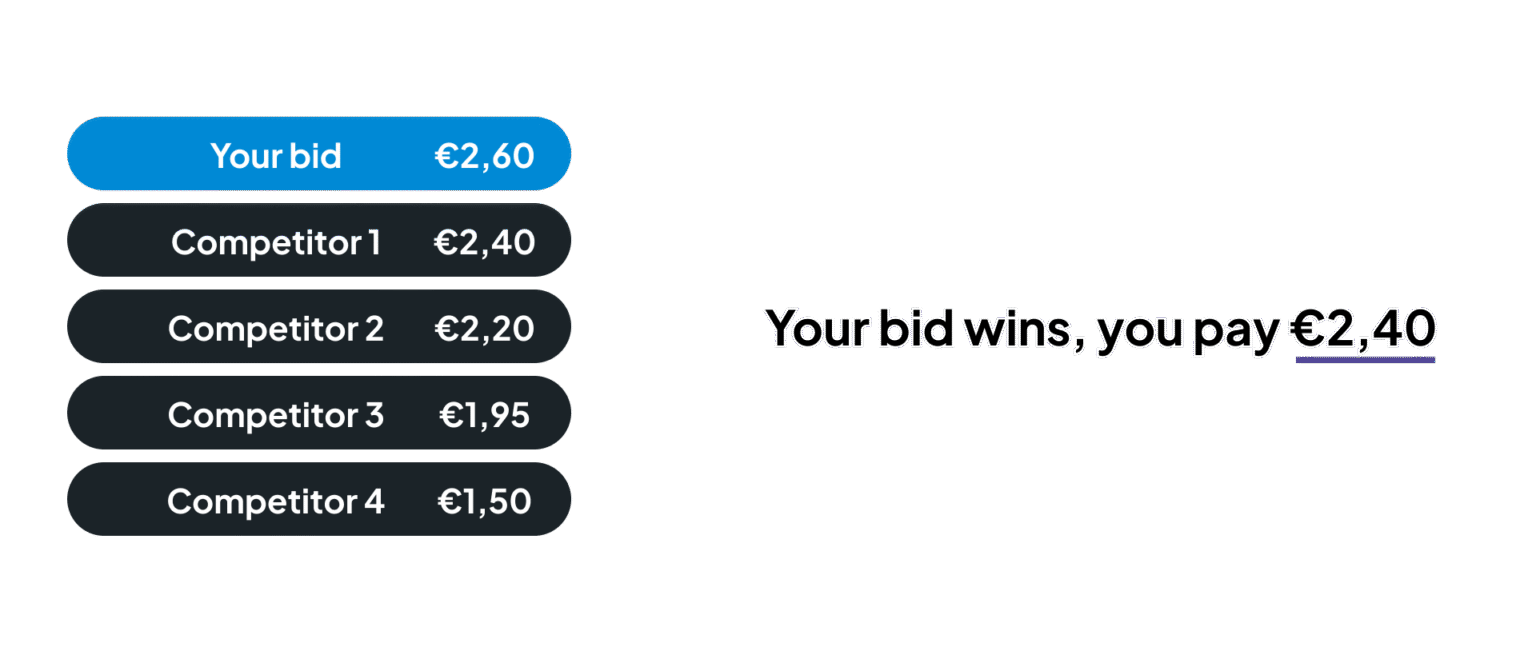
Here’s where it gets interesting for CSS partnerships: Google doesn’t treat every bid as a separate competitor. The system operates at the merchant level, not the CSS level.
When multiple CSS partners submit bids for the same product from the same merchant, Google recognises this isn’t two different businesses competing, it’s the same merchant appearing through different channels. So Google deduplicates at the merchant level. Only the highest bid from that merchant enters the auction against other merchants.
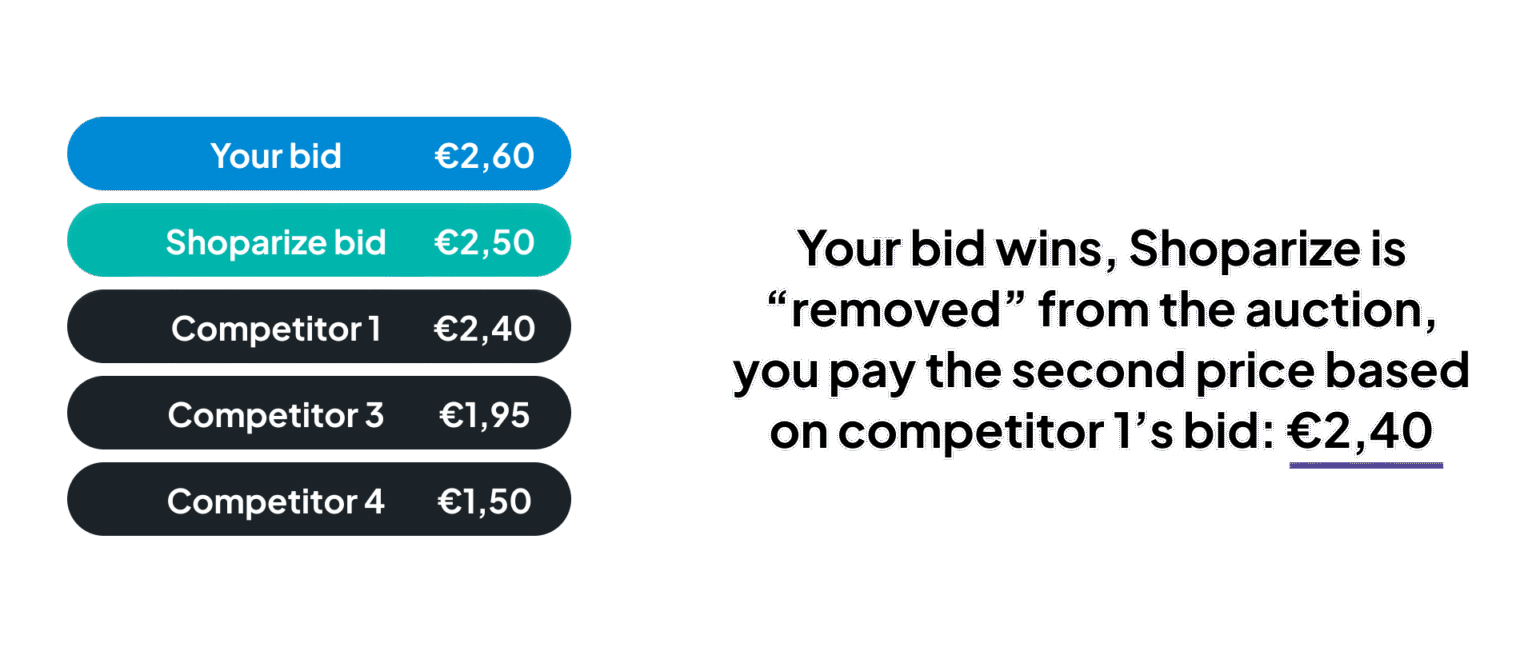
Your CPC is always determined by the next competing merchant, never by your own CSS partners. Effectively, the CSS is “on your team”, generating extra wins in auctions you otherwise would have lost.
In a scenario where you run your own campaigns and also work with a CSS partner, both might submit bids for your product. But Google sees both bids as coming from the same merchant. It takes the higher of the two bids to represent you in the auction, then determines your actual CPC based on what Competitor A or Competitor B bid.
You’re never second-priced against yourself.
More Surface, More Visibility, More Conversions
If adding a CSS partner doesn’t increase your costs, what does it actually do?
It expands your auction coverage. Google Shopping results aren’t a single slot, they’re a carousel of products, and there’s a sizable amount of queries triggering that carousel. Your internal team, no matter how capable, can only optimise for so many query variations, product combinations, and bidding scenarios.
A CPA-based CSS partner running alongside your campaigns captures opportunities you’re currently missing: long-tail queries your campaigns don’t cover aggressively enough, product variants that aren’t getting sufficient internal budget allocation, and time windows where your automated bidding pulls back but demand remains.
What ends up happening is that Shoparize adds visibility and conversions you would otherwise miss, and you’re paying for that incremental performance on a CPA basis.
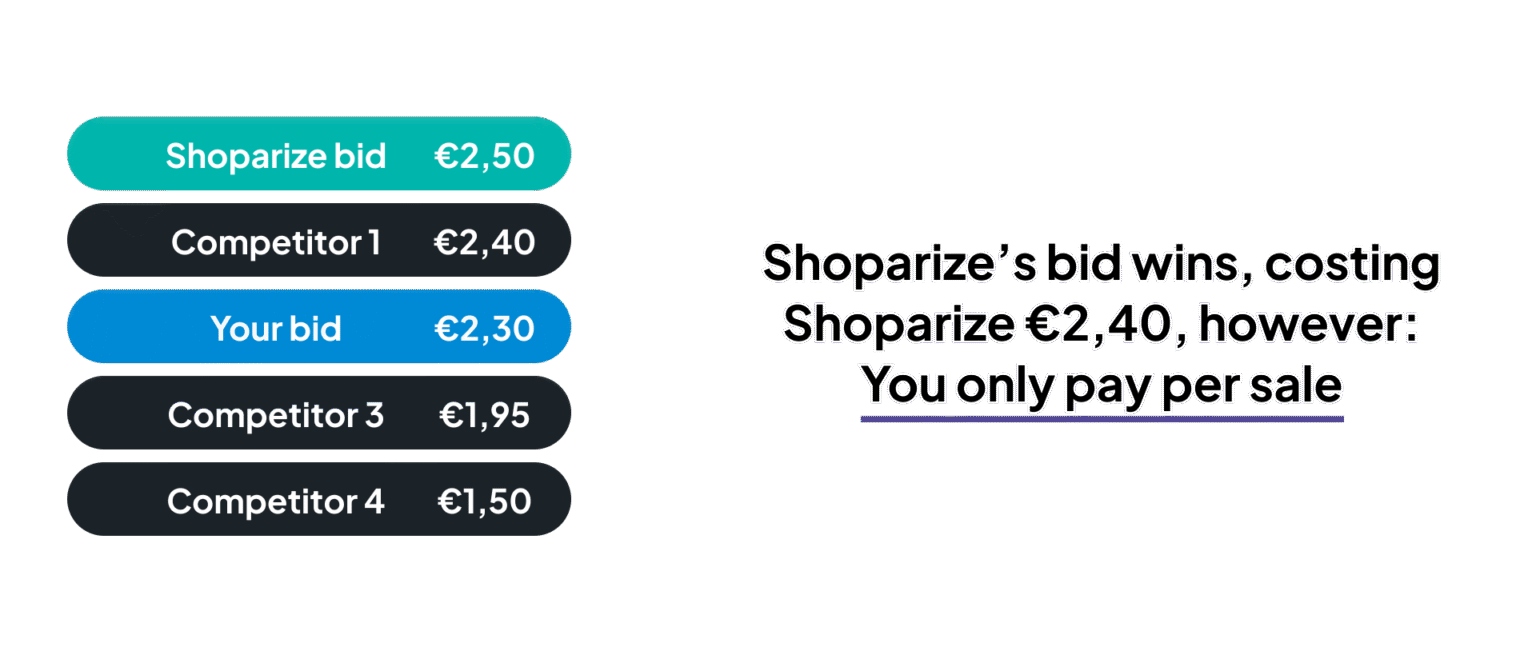
Long story short: The visibility gains you get from adding a CPA-based CSS partner are additive.
A solution for rising CPCs
Google Shopping CPCs have increased by 20-30% year over year across most European markets. Merchants face a structural challenge: Shopping is often both one of their largest performance channels and their fastest-growing cost centres.
Adding a CPA-based CSS partner means you’re shifting a portion of your Shopping investment from a cost-per-click model to a cost-per-sale model. The CSS partner absorbs the click costs, you pay only when products sell. This decreases your exposure to CPC inflation.
You’re adding a partner whose entire business model depends on extracting maximum value from every click. CPA-based CSS partners have strong incentive alignment: they only make money when you make sales. Every bidding decision, every feed optimisation, every campaign structure choice is oriented around conversion efficiency.
The combination lets you scale Shopping visibility without proportionally increasing CPC risk.
Best Practices: Running CSS Alongside Your Own Campaigns
If you’re considering adding a CSS partner to your existing Shopping setup, here’s how to structure it for success.
Keep tracking separate. Run your CSS partner through a separate tracking setup, whether that’s through your affiliate network or direct integration. This gives you clean attribution and lets you see exactly what’s incremental versus what you might have captured anyway.
Share your feed, but maintain standards. Your CSS partner’s performance depends heavily on feed quality. The same attributes that help your own campaigns help your CSS partner perform. Don’t provide a stripped-down feed and expect strong results.
Communicate on promotions. Planning a sale? Launching new products? Let your CSS partner know. They can adjust bids, add promotional tags, and coordinate timing to maximise visibility during peak moments.
Set appropriate commission rates. CPA models only work when the economics make sense for both parties. Set commission rates that align with your internal cost-per-sale targets, accounting for the zero-risk nature of the model.
Give it time to optimise. CSS campaigns, like any performance channel, need ramp-up time. Expect initial results within the first few weeks, but full optimisation typically takes 6-8 weeks as the partner learns which products, queries, and bid levels perform best for your catalogue.
TL;DR? Incremental performance without cannibalisation
The fear that CSS partners will cannibalise your campaigns comes from a reasonable intuition: more bidders usually mean higher prices. But Google Shopping’s merchant-level deduplication breaks this pattern. A CSS partner bidding on your products isn’t adding competition; they’re adding coverage.
For merchants already running strong Shopping campaigns, a CPA-based CSS partner represents something unusual in performance marketing: genuine upside with structurally limited downside. More impressions, more conversions, no increase to your CPCs, and you only pay for sales that actually happen.
The auction mechanics make it possible. The CPA model makes it low-risk. The question isn’t whether CSS partnerships cannibalise, the data shows they don’t. The question is how much incremental visibility you’re currently leaving on the table.