
Introduction
Google is rolling out a redesigned organic Shopping unit across the EEA, starting in early September. Where the new layout shows, the product grid is replaced by an accordion of rows, one per comparison service or shop, one open at a time, each pulling product tiles from that service's own listings. Google is one row among several. The Shopping tab has left the navigation, Google Shopping now sits behind "More products". The paid Shopping results are unchanged.
Google documents the new layout as the aggregator unit, a Search feature open to approved Vertical Search Services, a group that includes Comparison Shopping Services, for product queries among others.
Google's compliance answer to a July European Commission decision
In July 2026 the European Commission ruled against Google's self-preferencing in Search under Article 6(5) of the DMA, with a 60-day compliance deadline attached. The Commission found Google gave its own services more prominent placement, enhanced visuals and filters than comparable third-party services, and the new layout is Google's implementation of the required fix.
Google has weighed an appeal while implementing the remedy, and has publicly argued the changes reduce Search quality for European users.
The new presentation is rolling out in the EEA as of early September
Google's documentation states the unit is available to users in the European Economic Area only, so UK search results keep the old presentation. The aggregator unit covers hotel, flight, long-distance train or bus, and product queries. As this is a staged rollout, what an individual searcher sees can still vary by market and query.
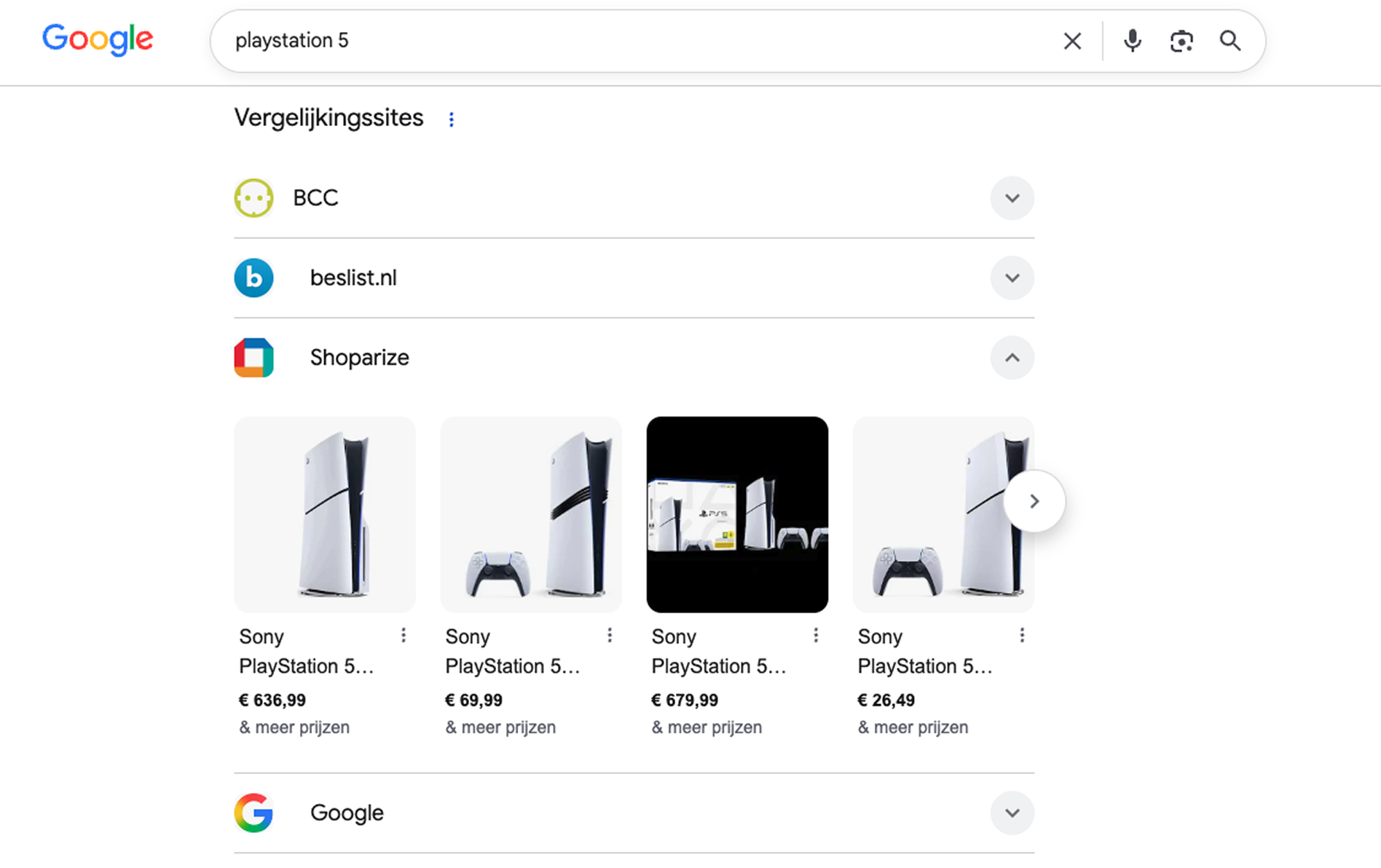
We see the new version showing up in our markets, with screenshots on file from the Netherlands and Germany since mid-September. When searching "playstation 5" on the Dutch google.nl, for example, the unit appears under the label "Vergelijkingssites" (Comparison Sites): collapsed rows for comparison shopping services (CSSs) and Google itself, with one row expanded showing product tiles, prices and a "more prices" link.
Tapping a tile in the Shoparize row opens the Shoparize.com product page for that item, where the shopper compares the available offers and clicks through to the merchant. The top-ranked provider's row is expanded by default and the rest sit behind a dropdown, and Google's algorithm still sets which provider ranks where.
The 60-day compliance period that began in July runs into late September, so the Commission's assessment of whether these changes suffice is still open. It is fair to expect the unit's exact shape to keep moving.
Early read on performance: clicks on CSS product pages roughly tripled
Clicks on CSS product pages from CSS free listings roughly tripled in the days after the rollout began (Shoparize internal data, 21 EU markets). Shoppers are using the accordion, and comparison service rows are taking a larger share of organic product searches than the old presentation gave them.
Merchants working with Shoparize and listing their products on Shoparize.com benefit immediately:
- Your products are immediately eligible for being featured in the new aggregator unit
- You instantly start capturing additional real estate in Shoparize's row in this new unit
- You benefit from the increased click volume the new aggregator unit is generating
What this means for merchants' CSS strategy
What the future holds for this new unit on the SERP remains uncertain, but as it stands the new aggregator unit solidifies the argument for a multi-CSS strategy, as working with multiple CSS partners generates additional visibility on the search engine result page, delivers additional clicks and drives incremental sales.
Pay-per-sale CSS offerings, such as Shoparize Managed Ads, stand out as winners in this change. Because the merchant pays only when the CSS generates a sale, Managed Ads generates additional visibility and clicks without introducing ad-spend risk for the advertiser.